+86 0577-66963080
yonglang@yonglang.com
Language


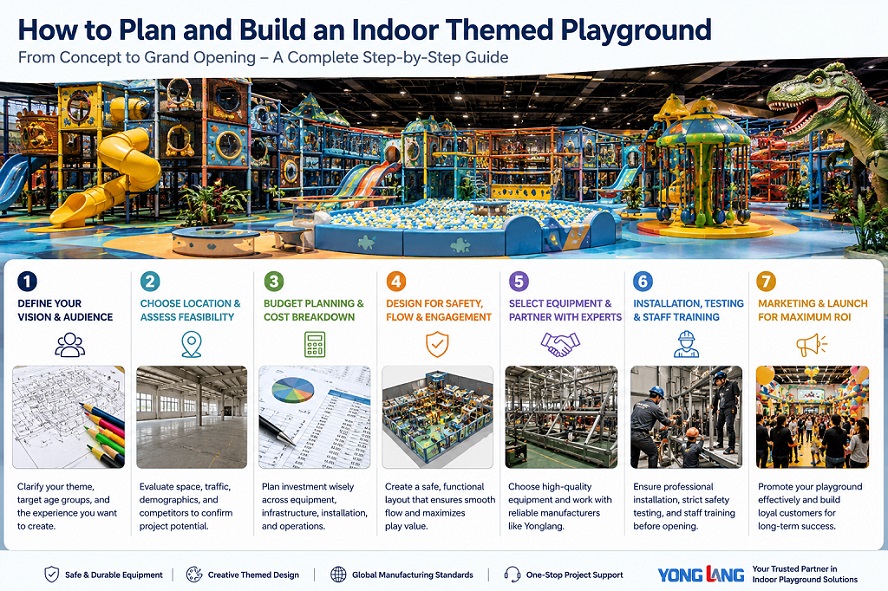
Creating a successful themed indoor playground requires careful planning to deliver engaging, safe, and profitable play experiences. Whether you're an entrepreneur, mall operator, or community center manager, this comprehensive guide walks you through every step—from initial concept to grand opening—addressing common pain points like high costs, safety compliance, low engagement, and operational inefficiencies.
Yonglang, a leading indoor play equipment manufacturer with over 30 years of expertise, specializes in turning imaginative themes into durable, safety-certified realities that drive repeat visits and revenue.
Before discussing equipment, themes, or budgets, start by answering a fundamental question:
Who is this playground for, and what experience do you want to create?
Many indoor playground projects struggle because owners focus on equipment first and customer needs second. However, the most successful facilities are built around a clearly defined audience.
Different age groups require completely different play experiences.
Age Group | Recommended Features |
1–3 Years | Soft play zones, sensory panels, ball pits |
3–6 Years | Small climbing structures, role-play activities |
6–12 Years | Rope courses, obstacle challenges, multi-level play towers |
Mixed Ages | Zoned layouts with separate activity areas |
For example, a playground designed primarily for toddlers should prioritize safety, sensory development, and parent interaction. A facility targeting older children can focus more on adventure, exploration, and physical challenges.
A strong theme transforms a playground into an experience.
Popular themed indoor playground concepts include:
Jungle Adventure
Ocean World
Space Exploration
Pirate Island
Fantasy Castle
Dinosaur Discovery
Candy Land
Transportation City
Rather than selecting a theme based solely on appearance, consider whether it supports storytelling, educational activities, and future expansion opportunities.
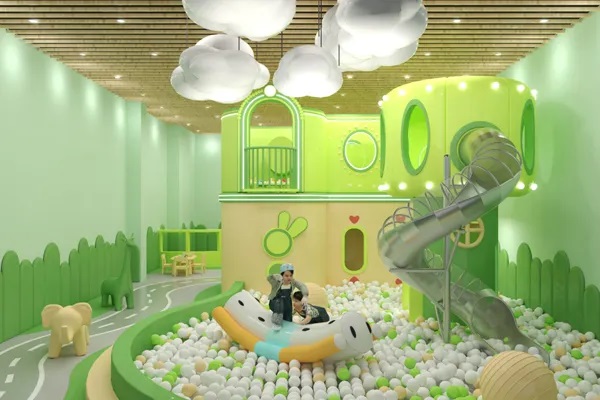
The best themed indoor playgrounds create an environment where children feel like they are entering a completely different world.
Even the most creative playground concept can fail if the location is poorly chosen.
Location directly affects visitor traffic, operational costs, and long-term profitability.
Ideal locations often include:
Shopping malls
Family entertainment centers
Mixed-use commercial complexes
Residential communities
Tourist attractions
Hotels and resorts
The surrounding demographics are equally important.
Ask:
How many families live nearby?
What is the average household income?
Are there competing indoor playgrounds nearby?
Does the area attract weekend visitors?
The ideal size depends on your target audience, business model, and available building space.
Commercial indoor playground projects commonly fall into the following categories:
Playground Size | Typical Application |
100–300 m² | Small activity centers and daycare facilities |
300–800 m² | Shopping mall playgrounds and children's centers |
800–2,000 m² | Family entertainment centers (FECs) |
2,000+ m² | Large indoor amusement destinations |
Remember that the play structure itself is only part of the required space. Additional areas should include:
Reception and ticketing
Parent seating
Birthday party rooms
Café or retail areas
Storage rooms
Emergency exits
Staff facilities
For most commercial projects, operators typically reserve approximately 20–30% of the total facility area for non-play functions to improve visitor comfort and operational efficiency.

Planning the budget for a themed indoor playground is often more complex than many first-time investors expect. The total investment is not determined by equipment alone, but by a combination of space conditions, design requirements, and project execution scope.
In most cases, it is more accurate to evaluate cost based on overall project structure rather than focusing only on indoor themed playground equipment pricing.
The final budget is mainly influenced by several key factors.
The first is the size of the facility. A small indoor playground under 200 square meters typically requires a limited set of soft play equipment and basic themed decoration. In contrast, medium and large facilities require multi-zone layouts, structural systems, and more complex themed environments, which naturally increase overall investment.
The second factor is theme complexity. A simple modular playground is relatively straightforward to produce and install. However, a fully customized themed indoor playground with storytelling elements, unique structures, and immersive design requires more design work, fabrication time, and material customization.
Location is another important factor. Shipping distance, import duties, local installation conditions, and labor costs can significantly affect the final project cost, even when the equipment configuration is similar.
A complete budget is usually divided into three parts.
The first is infrastructure preparation, which includes flooring systems, electrical work, lighting, HVAC systems, fire safety compliance, and basic site renovation. These costs are often underestimated but are essential for safe operation.
The second and most significant part is the indoor play equipment itself. This includes themed structures, slides, climbing systems, soft play areas, and interactive attractions. Choosing reliable indoor play equipment manufacturers is critical here, as equipment quality directly affects safety, durability, and long-term maintenance costs.
The third part includes launch and operational setup. This covers installation, staff training, initial marketing, insurance, and pre-opening preparations.
In addition to the main investment, several indirect costs should also be considered. These include international shipping, customs clearance, professional installation, safety inspections, and a contingency budget for future maintenance or upgrades.
Factoring in these costs early helps avoid unexpected financial pressure after the project is launched.
Essential Safety Standards
EN1176: European standard for playground equipment
ASTM: American safety standards for play equipment
ISO Certifications: ISO9001 (quality), ISO14001 (environment), ISO45001 (safety)
All equipment passes TUV certification
Non-toxic, eco-friendly materials
Proper safety zones around slides and climbing structures
Age-appropriate equipment for each zone
Regular maintenance and inspection protocols
Zone by age and activity (toddlers vs. active play).
Incorporate flow to prevent bottlenecks and maximize capacity.
Add rest areas for parents, sensory elements, and interactive features.
Ensure accessibility and inclusive options.
The quality of your manufacturing partner directly affects project success.
When evaluating indoor play equipment manufacturers, consider:
Can the supplier create customized themed environments?
How many commercial projects have they completed?
Do they follow international quality standards?
Can they provide guidance during installation?
Will replacement parts and technical support be available in the future?
A reliable supplier should act as a long-term project partner rather than simply an equipment vendor.
The construction phase is where planning becomes reality.
Proper installation ensures that the equipment performs safely and reliably for years to come.
Before installation begins:
Verify site dimensions
Confirm utility connections
Review equipment layouts
Inspect incoming components
Professional installation teams can significantly reduce project delays and assembly errors.
Every playground should undergo thorough inspection before welcoming visitors.
Testing should include:
Structural stability checks
Fastener inspections
Slide testing
Safety padding verification
Emergency access evaluation
Opening before completing proper testing can create unnecessary safety risks.
Employees should understand:
Daily inspections
Equipment operation
Emergency procedures
Cleaning protocols
Customer service standards
Well-trained staff contribute directly to both safety and customer satisfaction.
Even a well-designed themed indoor playground will not generate strong returns without effective marketing and a structured launch strategy.
Marketing should begin before the playground officially opens. Early-stage promotion helps build awareness and creates anticipation among local families. This can include construction updates, sneak previews of themed areas, and social media engagement to generate early interest.
Once the playground is ready to open, the focus should shift to creating memorable visitor experiences that naturally encourage sharing. Visually distinctive themed environments, interactive attractions, and photo-friendly areas can significantly increase organic exposure through social media.
After launch, long-term success depends on repeat visits rather than one-time traffic. Many successful operators use membership programs, birthday party packages, seasonal events, and educational activities to maintain consistent visitor flow throughout the year.
When combined with a strong design foundation and high-quality indoor themed playground equipment, an effective marketing strategy helps maximize ROI and ensures sustainable business growth.
1. What is a themed indoor playground?
A themed indoor playground is a play environment designed around a specific concept, such as a jungle, ocean, castle, or space adventure, creating an immersive experience for children.
2. How much space is needed for an indoor themed playground?
The required space depends on target age groups, equipment selection, and visitor capacity. Projects range from small play areas to large multi-level commercial facilities.
3. What are the most popular indoor playground themes?
Popular themes include jungle, ocean, pirate, castle, space, transportation, forest, and dinosaur concepts.
4. How long does it take to build an indoor themed playground?
Project timelines vary depending on customization and installation complexity. Planning, manufacturing, shipping, and installation should all be included in the project schedule.
5. What safety standards should indoor playground equipment meet?
Requirements vary by region, but commonly referenced standards include ASTM and EN 1176 playground safety standards.
6. How do I choose the right indoor play equipment manufacturer?
Look for manufacturers with strong design capabilities, customization experience, international project portfolios, quality certifications, and reliable after-sales support.
Building a successful themed indoor playground requires much more than selecting attractive equipment. From defining your audience and evaluating locations to designing engaging experiences and choosing reliable indoor play equipment manufacturers, every stage influences the final outcome.
The most profitable projects balance creativity, safety, operational efficiency, and long-term visitor engagement.
By following a structured planning process and partnering with experienced manufacturers such as Yonglang, investors and operators can create themed indoor playgrounds that delight families, encourage repeat visits, and generate sustainable business growth for years to come.