Yonglang designs and manufactures wooden playground equipment for parks, schools, communities, resorts, and other outdoor play spaces. Our wooden playground systems combine natural materials with climbing, sliding, balancing, rope play, and imaginative play elements, with layouts adapted to different site sizes, age groups, and project themes. From timber play structures to mixed-material designs integrating wood, ropes, slides, and other components, Yonglang provides flexible solutions for creating natural-looking playgrounds that are practical for long-term outdoor use.
Wooden Playground Structures for Different Ways to Play
Wooden Play Towers and Multi-Activity Structures
Timber towers can connect slides, climbing routes, bridges, lookout platforms and activity areas within one wooden play structure. The height, route difficulty and number of activities can be adjusted to suit the intended age group and available space.
Wooden Climbing and Balance Equipment
Wooden steps, balance beams, climbing frames, stepping elements and rope crossings encourage children to move through the playground in different ways. These activities can be arranged as a compact school playground or extended into a longer adventure route for a park or commercial recreation area.
Themed Wooden Playgrounds
Wood works well for treehouses, castles, ships, woodland settings and other landscape-oriented themes. Its texture gives large structures a less industrial appearance, while shaped panels, slides and rope details can develop the visual story.
Mixed-Material Wooden Play Systems
Many outdoor wooden play structures combine timber with ropes, nets, steel supports, plastic components or stainless steel slides. Each material is selected for a particular job, making it possible to balance appearance, structural requirements, play value and maintenance needs.
Wooden Playground Equipment for Commercial Sites
Schools and Kindergartens
Wooden playground equipment for schools can include lower play towers, visible circulation routes, climbing elements, bridges and slides. The layout should consider age separation, supervision, available safety zones and how groups of children enter and leave the equipment.
Public Parks and Communities
Parks and residential developments often need equipment that works with planting, paths and other landscape features. Wooden playground structures can create a softer visual transition between the play area and its surroundings while still supporting climbing, sliding, balancing and social play.
Resorts and Visitor Attractions
Resorts, campgrounds, cultural attractions and scenic destinations may use wooden equipment to support a recognizable project theme. Treehouses, ships, woodland castles and adventure routes can become part of the wider visitor experience rather than appearing as unrelated playground units.
Commercial Recreation Projects
Larger commercial playgrounds can combine timber structures with rope courses, high slides, climbing nets and themed elements. Capacity, circulation and maintenance access should be considered early, especially when the playground is intended to attract visitors and support longer play sessions.
Wooden Playground Projects
1. Woodland Wonderland at Yongxiu Kindergarten
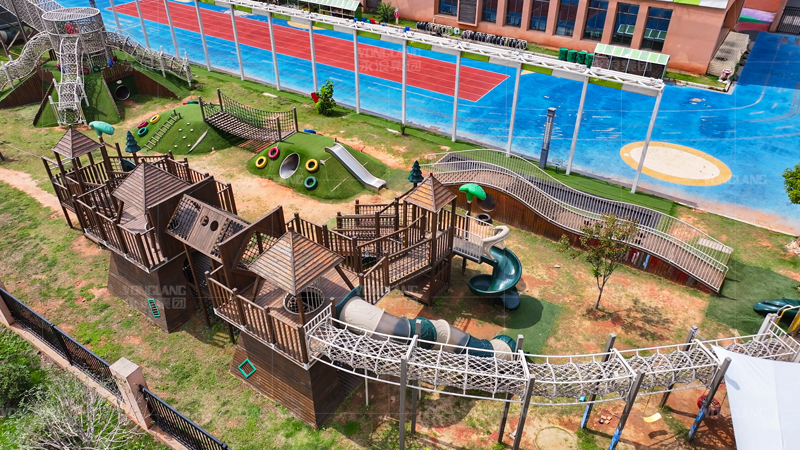
Yonglang's Woodland Wonderland project uses timber castles, wooden steps and boardwalks together with rope railings, climbing nets and slides. The different materials create several connected ways to climb, cross and move through the site while maintaining a woodland visual style.
2. U-Fun Amusement Park: Wood in a Themed Play Environment
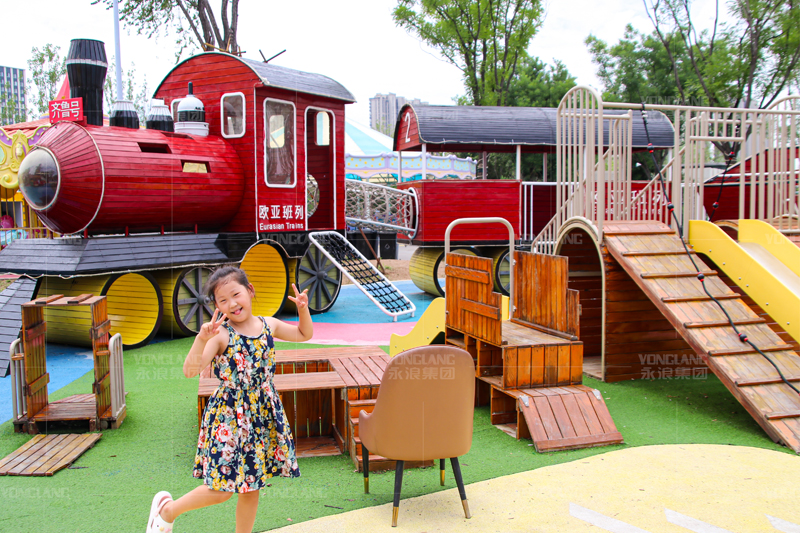
At U-Fun Amusement Park in Jinan, wooden platforms, bridges and climbing elements are incorporated into a larger themed play environment. The train- and desert-inspired areas combine wood with metal frames, ropes, slides and decorative structures, creating varied routes for climbing, crossing, crawling and imaginative play.
3. Robinia Playground Quality Review
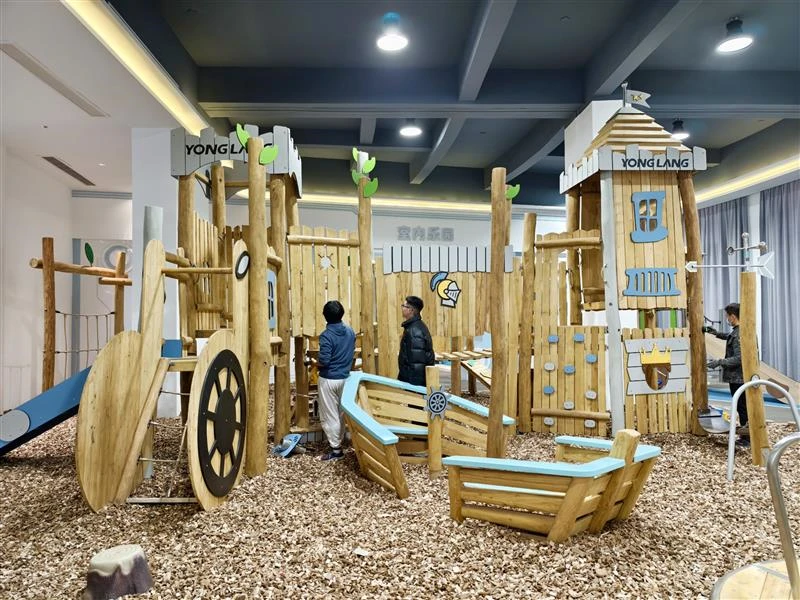
TÜV-certified professionals assessed Robinia playground products in Yonglang's exhibition hall. The review covered details including surface finishes and the corrosion resistance of playground hardware, with Yonglang’s engineering and sales teams participating in the process.
How Yonglang Plans a Custom Wooden Playground
1. Review the Site
Send a site plan, dimensions, photos or architectural drawings. The design team reviews the available area, entrances, circulation, terrain and surrounding landscape.
2. Define the Users and Play Goals
Confirm the target age group, expected user capacity and preferred activities. A kindergarten play area requires a different height and activity level from an adventure playground in a public park.
3. Develop the Layout
Yonglang arranges towers, climbing routes, slides, bridges, ground-level activities and safety zones around the usable space. The layout can also consider supervision, accessibility and connections with paths or other facilities.
4. Select the Material Combination
The team determines where wood should be used and where rope, steel, plastic, HPL or stainless steel components are more suitable. The wood species and construction details are confirmed for the selected product and project conditions.
5. Confirm Standards and Project Documents
Tell Yonglang the destination country and required playground standard at the start of the project. This allows relevant dimensional, structural and documentation requirements to be considered before production.
6. Prepare for Production and Installation
Once the design and quotation are approved, Yonglang prepares the equipment and supporting installation information for the project. Installation responsibilities and any required on-site support should be confirmed before ordering.
Maintenance of Outdoor Wooden Play Equipment
Inspect Wood Surfaces
Check frequently touched surfaces, edges, steps and platforms for cracking, splintering, impact damage or unusual wear. The inspection schedule should reflect site traffic and local weather conditions.
Keep Water Away from the Structure
Maintain drainage around posts, platforms and surfacing. Leaves, soil and standing water should not be allowed to remain against wooden components.
Check Hardware and Connections
Inspect bolts, brackets, anchors and structural connections. Tighten or replace components according to the equipment’s maintenance instructions.
Inspect the Complete Playground
Wood is only one part of a mixed-material system. Rope connections, slides, steel supports and safety surfacing should be inspected at the same time.
Keep Maintenance Records
Record inspections, repairs and replacement parts. A clear maintenance history helps operators identify recurring wear and plan future work.
FAQs About Wooden Playground Equipment
What type of wood does Yonglang use for playground equipment?
Robinia is Yonglang's primary wood for commercial nature-play systems. Pine may also be used where appropriate. The final wood specification depends on the selected product, project environment and construction requirements.
Is wooden playground equipment suitable for schools and public parks?
Yes. Wooden playground equipment can be designed for schools, kindergartens, parks, communities, resorts and commercial recreation sites. The layout, activity height, capacity and safety zones should be planned for the intended users and location.